
The Muzzle without a Strap
The Little PrinceFollows the small practical detail of the missing leather strap from the muzzle and how it becomes the hinge of cosmic uncertainty.
increasing Bearing strength in each event
 decreasing
Bearing strength in each eventdecreasingMuzzle Drawn for Sheep
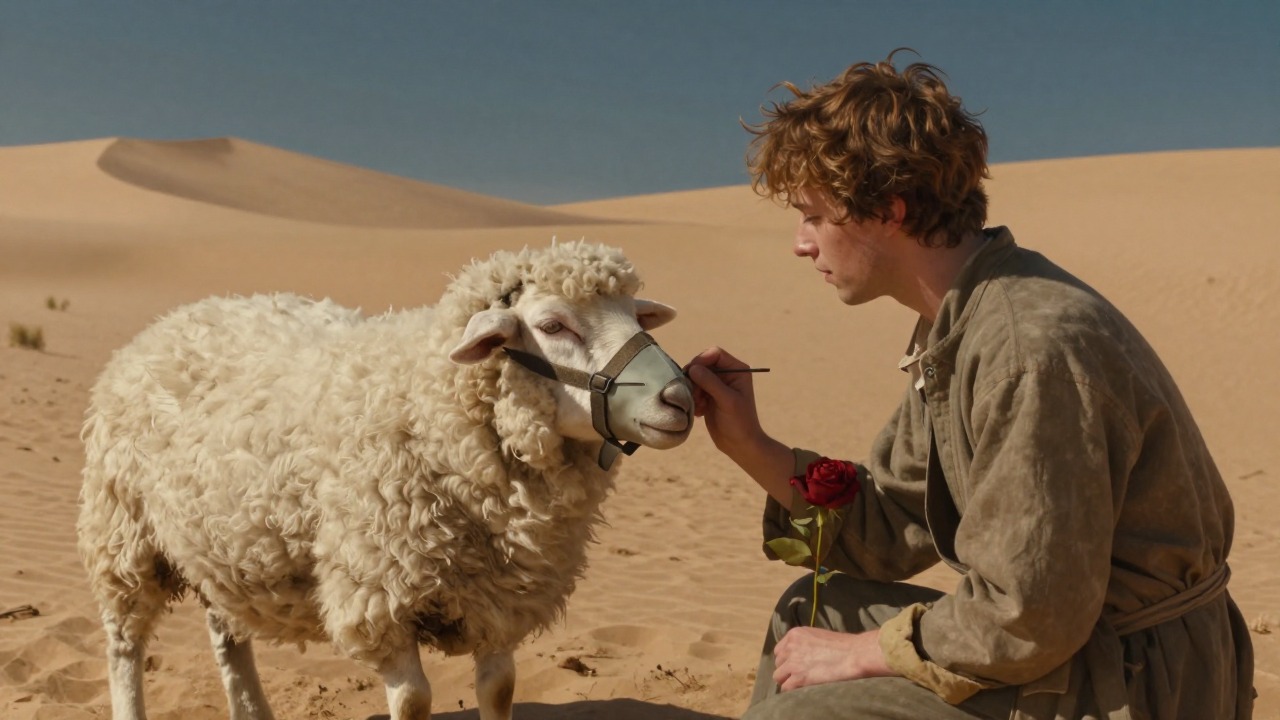
Muzzle Drawn for Sheep
Context
In the shared desert days, the narrator draws a muzzle for the Sheep. The muzzle is meant to be a practical safeguard, preventing the Sheep from harming the Rose once the prince returns to his planet.
Development
The act of drawing makes the narrator a participant in the prince's responsibilities. He is not merely a storyteller but a craftsman trying to solve a problem in the cosmic order.
Significance
The muzzle is an object of care. It represents the attempt to give fragile love a tool of protection.
Strap Left Off
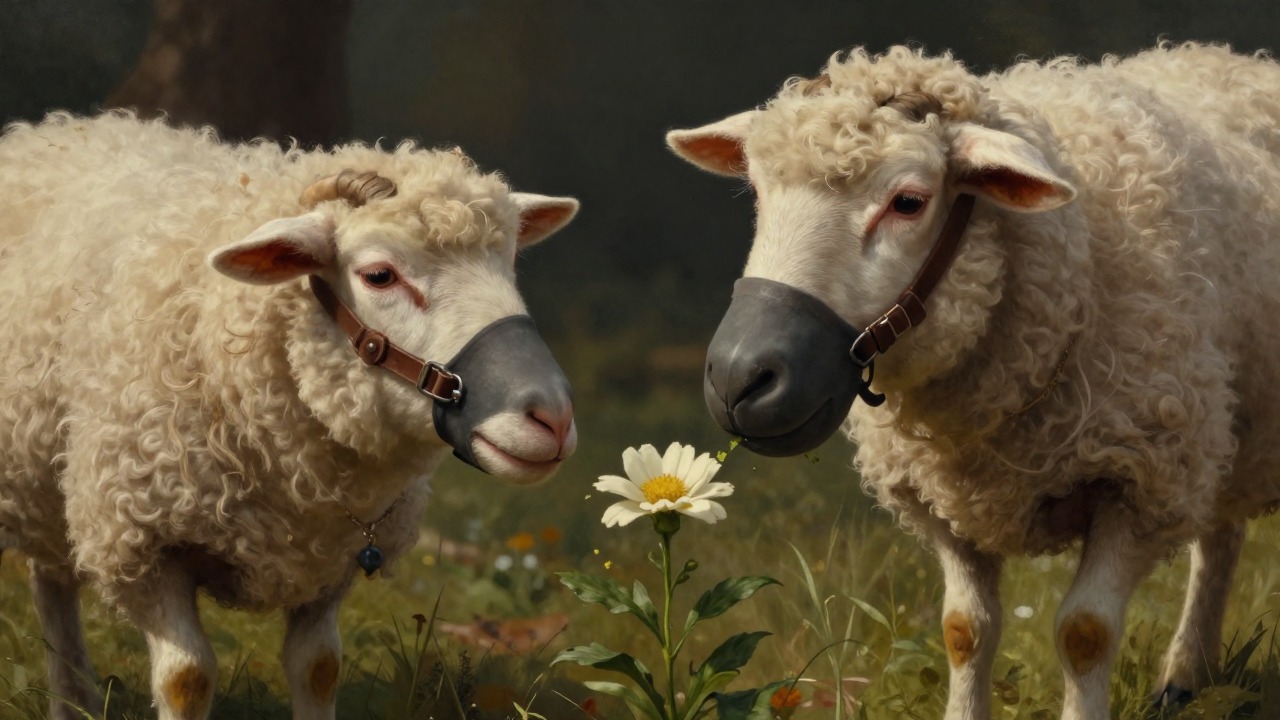
Strap Left Off
Context
The narrator forgot the leather strap that would fasten the muzzle onto the Sheep. Without the strap, the muzzle cannot be secured, and the Sheep could raise its head and eat the flower.
Development
The detail is given almost as an aside, then immediately becomes the seed of six years of wondering. The narrator draws attention to the incompleteness of his own creation.
Significance
The missing strap is an emblem of human fallibility. It injects imperfection into a story that longs for a perfect ending.
Remembered Omission
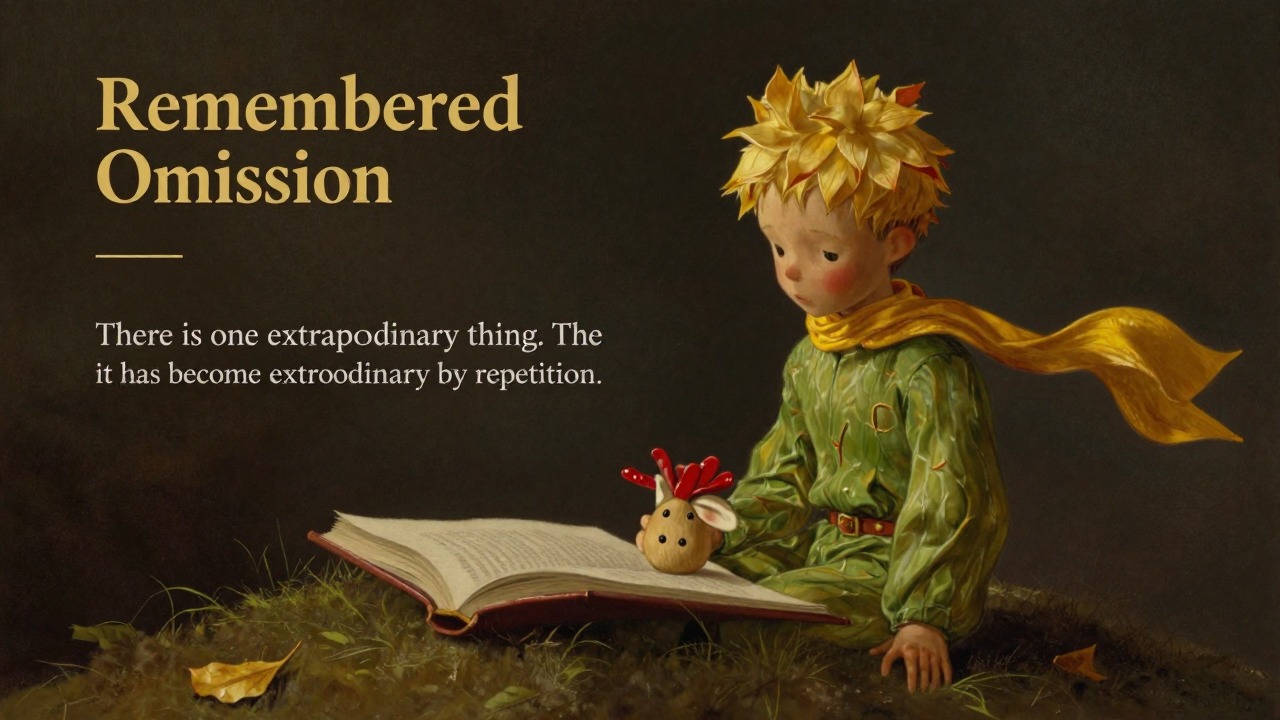
Remembered Omission
Context
During the epilogue, the narrator returns to the missing strap with the phrase "there is one extraordinary thing." The omission has not faded; it has become extraordinary by repetition.
Development
The memory is attached to a concrete object: the muzzle. The narrator visualizes the prince trying to fasten a strap that does not exist. This imagined failure renews the anxiety.
Significance
Remembered omission shows how small errors can haunt a conscience. The narrator's grief has attached itself to a tiny flaw in an old drawing.
Potential Escape
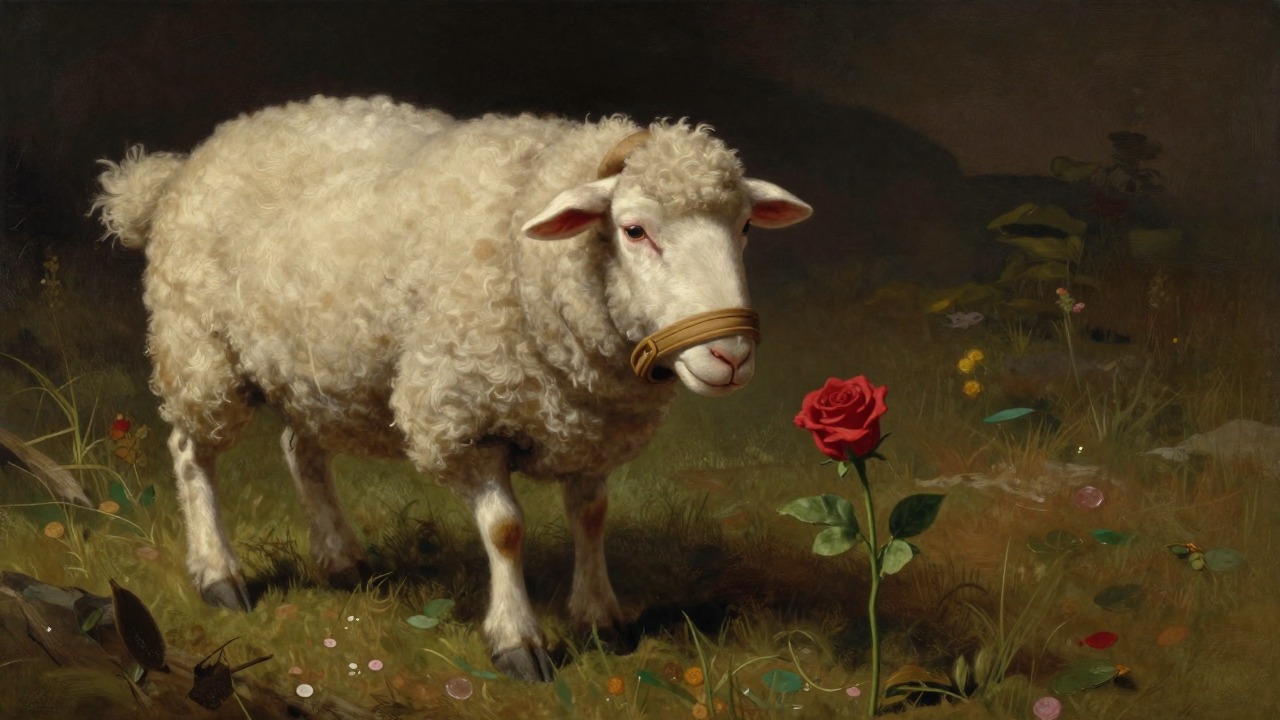
Potential Escape
Context
With the strap missing, the Sheep is potentially free to eat the Rose. The narrator imagines the animal going out without noise in the night, undoing the muzzle's purpose.
Development
The escape is not observed but hypothesized. It belongs to the kingdom of possibility, which can be more terrifying than fact. A single unguarded night could destroy everything.
Significance
Potential escape turns the forgotten strap into a portal of fear. The future of the Rose depends on a piece of leather that was never drawn.
Symbol of Inevitable Error
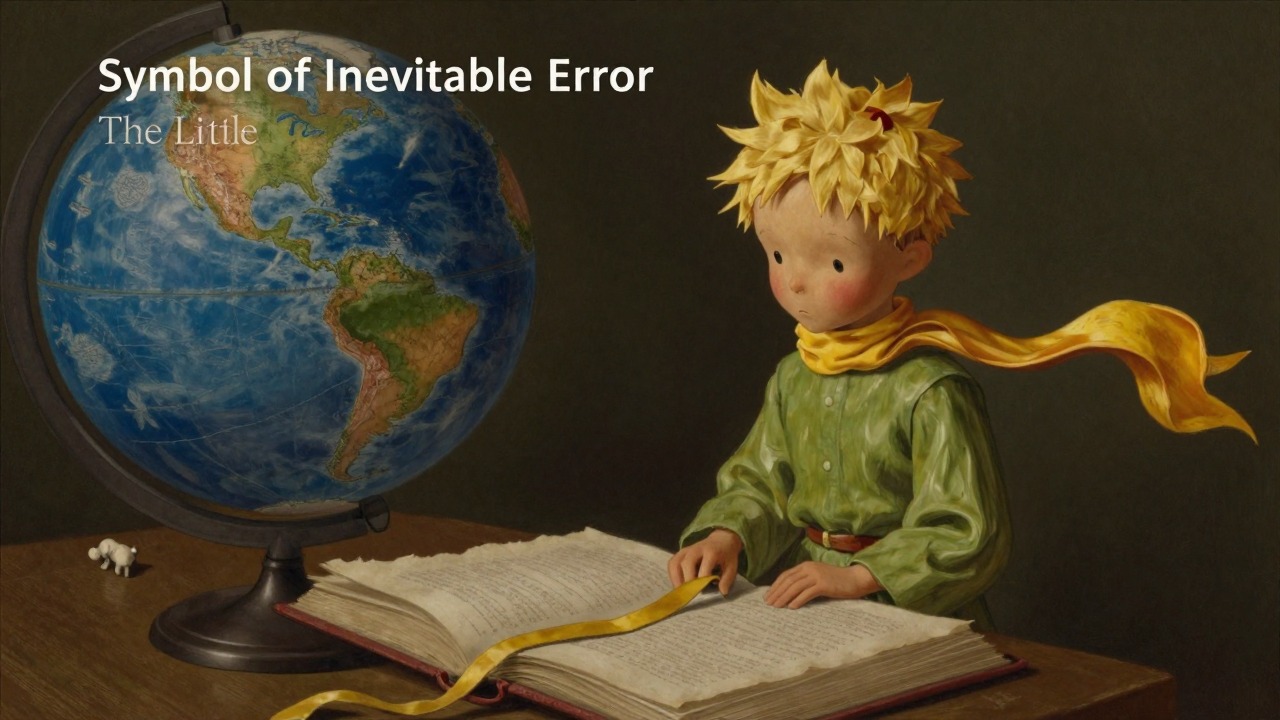
Symbol of Inevitable Error
Context
The narrator reflects that at some moment or other one is absent-minded, which is enough to forget a globe or let a sheep wander. The missing strap is the first and purest example of that universal absent-mindedness.
Development
The muzzle's missing strap becomes a parable: every guardian can fail, every protector is human. The narrator transforms a personal mistake into a general law of vulnerability.
Significance
As a symbol, the strapless muzzle explains why the central mystery can never be settled. It is because human error is permanent that the question of the Rose remains open.
when the narrator drew the muzzle while in the desert with the Little Prince
after the muzzle was drawn, when the narrator realized the strap was missing
six years later, when the narrator still thinks about the forgotten strap
when the narrator considers what the Sheep could do with an unfastened muzzle
in the epilogue's meditation on absent-mindedness
